
How Businesses Organize Staff Transport in Melbourne
Getting corporate transport in Melbourne right involves more than just booking a vehicle when needed. The transport solution you choose needs to balance reliability with cost efficiency, employee satisfaction with operational simplicity, and flexible scheduling with predictable budgeting. A manufacturing facility running shift workers has different needs to a professional services firm coordinating conference attendance or a technology company managing airport transfers for interstate executives, and the right approach to staff transport in Melbourne can make a real difference to how smoothly your business operates.
Understanding how to structure that solution means you arrive at the right transport model the first time, without overpaying for services you don’t need or discovering gaps in coverage that disrupt operations and frustrate employees.
Planning Tip: Start with a transport audit: document all current employee travel patterns, calculate actual costs including hidden expenses (parking reimbursements, taxi claims, productivity lost to parking searches), and identify pain points employees report. This baseline data informs whether ad-hoc transport arrangements genuinely cost less than organised corporate shuttle services in Melbourne, or whether perceived savings hide larger inefficiencies.
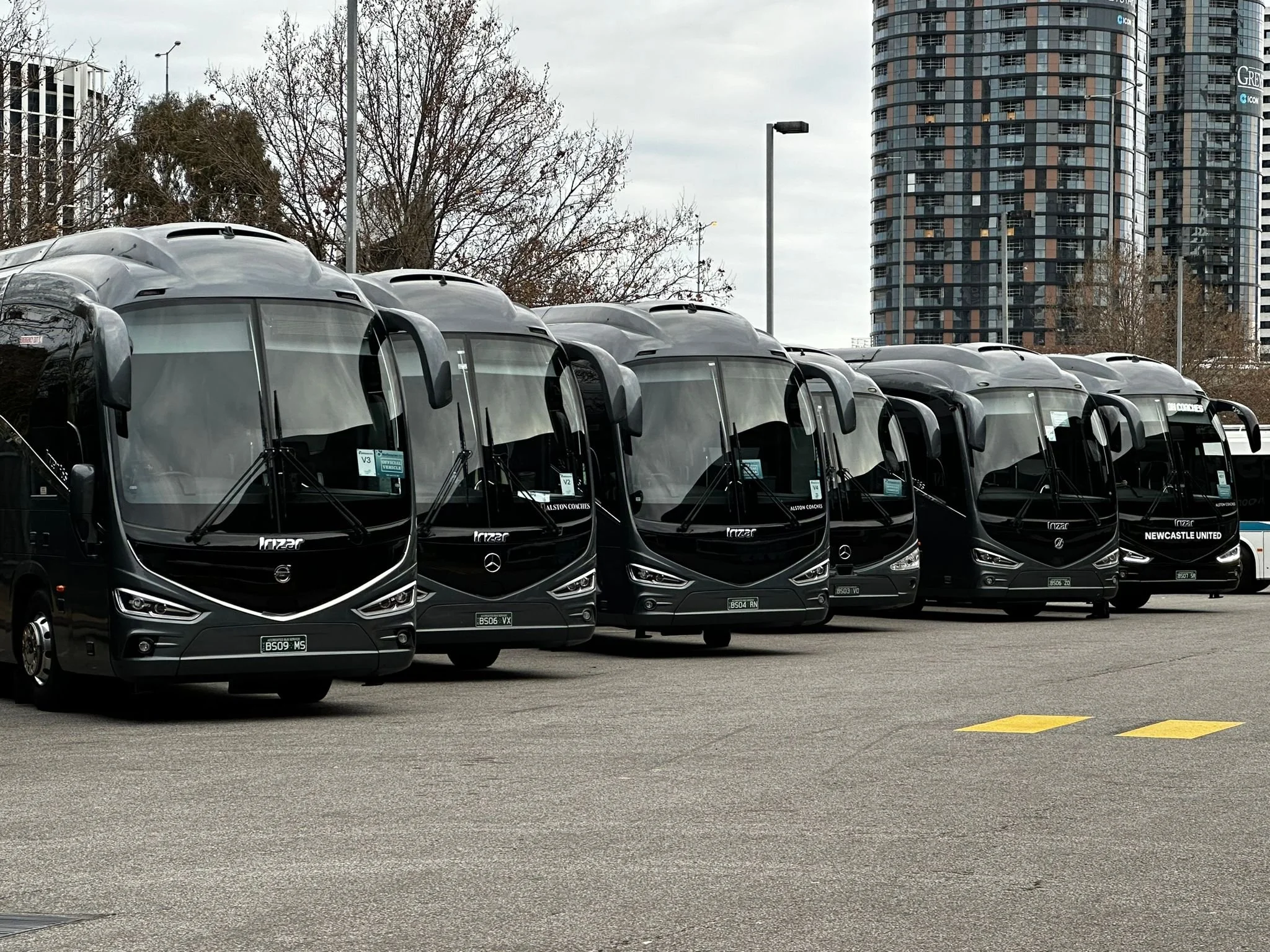
Why Staff Transport is Becoming Popular in Melbourne
Melbourne businesses are increasingly adopting structured employee transport programs for reasons that extend beyond simple cost comparison. The shift reflects changing workplace expectations, Melbourne’s geographic expansion, infrastructure pressures, and evolving attitudes toward employee experience and environmental responsibility.
This trend accelerates particularly among businesses operating in locations poorly served by public transport: industrial estates in outer suburbs, office parks between train lines, and facilities requiring late-night or early-morning access when public transport doesn’t run reliably.
Melbourne’s Geographic Expansion Creates Access Challenges
Melbourne’s employment centres continue spreading into outer suburban areas where office and industrial land costs less. Locations like Truganina, Dandenong South, Laverton North, and Clayton South host major employers but are beyond the reach of many workers living in established residential areas due to limited public transport access.
Employees commuting to these locations face genuine challenges: limited train services requiring bus connections that add 30 to 45 minutes each way, infrequent services outside peak periods that don’t suit shift workers, and the expense of maintaining vehicles specifically for commuting when their home locations otherwise wouldn’t require car ownership.
Businesses addressing these challenges through organised staff transport in Melbourne find they improve recruitment outcomes (expanding their candidate pool beyond those with personal vehicles), reduce turnover (removing a major friction point from daily work life), and demonstrate tangible commitment to employee wellbeing beyond abstract benefits statements.
Parking Constraints Drive Alternative Solutions
CBD and inner-suburban businesses face opposite geography problems: excellent public transport access but severe parking constraints. Office buildings provide insufficient parking for all employees; street parking requires expensive permits or time-limited meters; and nearby commercial parking costs $30 to $50 daily.
For businesses where some staff genuinely need vehicles during work hours (client visits, site inspections, deliveries), structured corporate transport in Melbourne reduces total parking demand by providing shuttle services from major transport hubs. Staff who don’t need daytime vehicle access use the shuttle, freeing up limited parking for those who do.
Environmental and Social Responsibility Commitments
Businesses committed to environmental sustainability recognise that employee commuting represents significant carbon emissions under their indirect influence. Providing employee shuttle services in Melbourne demonstrably reduces this footprint: one 24-seat shuttle replaces 18 individual vehicle journeys, delivering measurable environmental benefits that support broader sustainability reporting and certification requirements.
This environmental angle particularly resonates with businesses pursuing B Corp certification, carbon-neutral operations, or participation in sustainability indices where supply chain and employee commuting emissions contribute to overall ratings.
Competitive Advantage in Talent Acquisition
In competitive employment markets, differentiated employee benefits influence hiring decisions. Offering reliable office transport solutions in Melbourne appeals particularly to candidates who don’t drive, live in areas poorly served by public transport to your location, or value time savings over vehicle ownership costs.
Progressive employers frame transport benefits alongside flexible work arrangements, professional development, and wellbeing programs as part of holistic employee value propositions. For roles where qualified candidates are scarce, transport support can tip hiring decisions in your favour.
Common Corporate Transport Needs
Melbourne businesses use business travel services across several distinct use cases, each with specific requirements for scheduling, vehicle types, and service levels. Understanding which categories apply to your organisation helps structure appropriate solutions.
Daily Employee Shuttles
Regular daily shuttle services represent the most structured form of corporate transport in Melbourne, typically running fixed routes and schedules that mirror business operating hours. These services suit businesses with concentrated employee populations living in specific geographic areas or facilities located beyond convenient public transport access.
Common daily shuttle models:
Hub-and-spoke routes: Shuttles run from major train stations to business facilities, typically operating morning inbound services and evening outbound services timed to coincide with train arrivals and business finish times.
Residential pickup routes: Vehicles follow predetermined routes through residential areas with designated pickup points (shopping centres, landmark corners) where employees congregate.
Multi-site campus shuttles: Businesses operating across multiple nearby locations provide continuous shuttle loops between sites, allowing staff to move between facilities without personal vehicles.
Shift worker transport: Manufacturing, logistics, and healthcare facilities running 24-hour operations provide shuttle services for night shifts and early morning starts when public transport doesn’t operate.
Daily shuttle economics: The break-even calculation for dedicated daily shuttles typically requires a minimum utilisation of 12 to 15 regular passengers per service. Below this threshold, subsidising public transport or providing individual travel allowances often costs less. Above this threshold, particularly for routes running twice daily (morning and evening), dedicated corporate shuttles in Melbourne deliver better value and employee satisfaction.
Conference Transport
Conference and event transport represents periodic rather than daily demand but requires careful coordination to support successful corporate events. This category covers staff attending external conferences, delegates arriving at your facilities for hosted events, and large team gatherings requiring coordinated movement between venues.
Conference transport planning considerations:
Hotel pickup coordination: Multi-day conferences often require morning pickups from multiple accommodation providers to ensure all delegates arrive at the venue on time for session starts.
Venue access protocols: Major Melbourne conference venues (MCEC, Crown Convention Centre, various hotel conference facilities) have specific coach access requirements and designated drop-off zones. Experienced drivers navigate these efficiently.
Mid-day venue changes: Events combining conference sessions at one location with networking dinners or entertainment elsewhere require flexible timing and multiple-stop coordination.
Airport transfer integration: Interstate delegates often need coordinated airport pickups on arrival days and returns on departure days, requiring vehicles sized appropriately for luggage capacity.
For comprehensive conference transport planning guidance, including multi-day logistics, see our detailed guide on corporate coach hire in Melbourne.
Airport Transfers
Executive airport transfers and staff travel represent high-visibility business travel in Melbourne, where service quality directly affects productivity and corporate image. These transfers are split into two categories: regular employee travel (sales teams, field service, project delivery) and executive/VIP transport (board members, senior leadership, important clients).
Airport transfer service tiers:
Standard shared shuttles: Multiple employees travelling to the airport on similar schedules share vehicles, reducing per-person costs while providing guaranteed service.
Individual executive cars: Senior staff receive dedicated vehicles with professional drivers, door-to-door service, and flexibility around flight times.
Group delegation transport: Teams travelling together for conferences, trade shows, or client presentations use minibuses or small coaches that maintain group cohesion and facilitate pre-trip briefings during transit.
Flight monitoring and timing flexibility: Professional airport transfer providers monitor incoming flights and adjust pickup times for delays, ensuring vehicles arrive when passengers clear customs rather than forcing passengers to wait if flights arrive early. This service standard matters particularly for interstate executives whose time is valuable, and schedules are tight.
Businesses that require regular airport transfers benefit from establishing corporate accounts with transparent pricing, consolidated monthly invoicing, and guaranteed vehicle availability, even during peak travel periods. This removes the uncertainty and price variability that affects ad-hoc bookings.
Benefits of Organised Staff Transport
Structured corporate transport in Melbourne delivers measurable benefits across financial, operational, and employee satisfaction dimensions. These advantages compound over time and often justify investment even when direct cost comparison appears neutral.
Time Efficiency and Productivity Gains
Employees using dedicated staff transport in Melbourne reclaim time previously spent commuting for productive work or personal activities. WiFi-enabled vehicles allow checking emails, preparing for meetings, or completing administrative tasks during transit. This transforms dead commute time into billable hours for consulting firms, preparation time for sales teams, or simply less stressful starts and finishes to workdays.
For businesses operating in locations requiring 45 to 90 minute commutes, this productivity benefit accumulates significantly: an employee saving 60 minutes daily through shuttle-enabled work time recovers approximately 250 hours annually, equivalent to more than six working weeks of productive capacity.
Predictable Cost Structure and Budget Control
Unmanaged employee travel creates unpredictable costs: parking reimbursements fluctuate with availability and pricing, taxi claims vary based on surge pricing and individual usage, and vehicle allowances don’t reflect actual kilometres driven. This variability complicates budget forecasting and expense management.
Organised corporate shuttle services in Melbourne offer fixed monthly costs, simplifying budgeting. Annual contracts lock in pricing for the entire financial year, removing mid-year cost surprises. This predictability matters particularly for businesses with tight margin control or those reporting transport expenses as separate budget line items.
Reduced Parking Infrastructure Requirements
Businesses planning facility construction or office fit-outs face significant parking infrastructure costs: multi-level car parks cost $30,000 to $50,000 per space to construct, surface parking consumes valuable land that could generate revenue through building expansion, and CBD locations often face planning restrictions limiting total parking provision.
Providing employee shuttle services in Melbourne reduces required parking capacity, potentially eliminating entire levels from multi-story structures or allowing surface parking to serve only essential vehicles (delivery, field service, executive). For a 200-employee facility, reducing parking requirements from 150 spaces to 80 through shuttle services saves millions in construction costs.
Employee Satisfaction and Retention Benefits
Commute stress consistently ranks among the top factors of employee dissatisfaction in workplace surveys. Traffic congestion, parking frustration, public transport delays, and the expense of maintaining vehicles primarily for commuting all contribute to daily workplace stress that affects morale and retention.
Businesses that provide reliable staff transport in Melbourne eliminate this friction point entirely. Employees board at convenient locations, travel in comfort, arrive predictably, and avoid both driving stress and public transport crowding. This tangible, daily benefit strengthens employee satisfaction in ways that abstract benefits (gym memberships, fruit bowls) cannot.
Environmental Impact and Sustainability Reporting
Businesses measuring Scope 3 emissions (indirect emissions, including employee commuting) find that transport accounts for a substantial share of their carbon footprint. One shuttle replacing 15 individual vehicle commutes delivers measurable emission reductions that support sustainability targets and certification programs.
This environmental benefit carries reputational value: businesses can legitimately promote employee transport programs in sustainability reports, B Corp applications, and recruitment materials. For organisations where environmental credentials influence customer decisions or employee attraction, the sustainability angle justifies investment even when pure financial ROI appears marginal.
Organised Transport vs Unmanaged Travel: Comparison
Understanding the full cost and benefit differences between structured corporate transport in Melbourne and unmanaged employee travel requires accounting for hidden costs and indirect benefits that simple per-trip pricing comparisons miss.
| Factor | Unmanaged Travel | Organised Corporate Transport |
|---|---|---|
| Direct costs | Variable: parking, fuel, taxi claims, public transport | Fixed: predictable monthly contracted rates |
| Hidden costs | Admin processing, late arrivals, parking search time | Minimal: single invoice, guaranteed punctuality |
| Productivity | Lost commute time, stress, parking delays | Work-capable travel time, reduced stress |
| Flexibility | High for individuals, low for groups | Structured schedules, planned route changes |
| Employee satisfaction | Variable, commute remains individual burden | Consistently high, visible employer support |
| Environmental impact | High per-person emissions | Significantly reduced through vehicle sharing |
| Scalability | Grows linearly with headcount | Efficient scaling through route optimisation |
This comparison demonstrates why businesses increasingly adopt structured group corporate travel in Melbourne, even when narrow cost analysis suggests marginal differences. The total value calculation includes productivity, satisfaction, environmental, and operational factors that financial spreadsheets often overlook.
Choosing the Right Corporate Transport Provider
Selecting a reliable corporate shuttle partner in Melbourne requires evaluating operational capability, service standards, and commercial terms that extend beyond simple per-kilometre pricing. The wrong provider creates ongoing frustration through unreliability, poor communication, and service quality that damages rather than enhances employee experience.
Operational Reliability and Fleet Capacity
Corporate transport reliability matters more than price. A shuttle that arrives late, breaks down regularly, or gets cancelled without notice creates a worse employee experience than no service at all. When evaluating providers, investigate these operational reliability indicators:
Fleet size and diversity: Providers with diverse fleets can substitute vehicles when primary vehicles require maintenance. Single-vehicle operators cannot provide this redundancy.
Maintenance standards: Request evidence of preventive maintenance schedules, safety inspection records, and vehicle age. Well-maintained newer fleets deliver better reliability than ageing vehicles serviced reactively.
Backup arrangements: Confirm written backup vehicle policies specifying response times when primary vehicles fail. Professional providers maintain spare capacity specifically for this purpose.
Driver consistency: Regular routes benefit from driver familiarity. Providers should aim to assign consistent drivers to daily shuttle services rather than rotating staff unpredictably.
Service Standards and Communication Protocols
Daily staff transport in Melbourne requires professional service standards that reflect well on your business. Evaluate these service quality factors:
Driver professionalism: Appropriate attire, punctuality, courtesy, and discretion matter when drivers interact with your employees daily.
Vehicle cleanliness: Daily cleaning standards and regular deep cleaning schedules ensure vehicles present professionally.
Real-time communication: Modern providers offer passenger apps showing vehicle locations, estimated arrival times, and service updates. This transparency reduces uncertainty and waiting.
Issue resolution protocols: Understand how the provider handles complaints, service failures, and change requests. Responsive communication matters when problems inevitably occur.
For broader guidance on evaluating transport providers for different business needs, our comprehensive article on choosing the perfect bus for your group covers selection criteria for corporate transport decisions.
Commercial Terms and Contract Flexibility
Corporate transport contracts typically run 12 to 36 months to justify route planning and vehicle allocation. When negotiating terms, address these commercial factors:
Pricing structure: Confirm whether pricing is fixed for the contract term or subject to CPI adjustments, fuel levy variations, or other indexation.
Route change provisions: Your business may relocate facilities, change operating hours, or experience shifts in employee residential patterns. Contract flexibility around route adjustments prevents being locked into inappropriate services.
Scaling provisions: Understand how pricing adjusts if passenger numbers grow or decline significantly. Can you add services or reduce frequency without penalty?
Termination clauses: While long contracts provide pricing stability, ensure they include reasonable termination provisions for business restructuring, facility closures, or fundamental service failures.
Compliance and Safety Credentials
Employee transport carries duty of care obligations. Verify that providers maintain:
Current commercial passenger vehicle accreditation in Victoria
Comprehensive insurance covering employee transport scenarios
Driver qualifications, including appropriate licence classes and safety training
Fatigue management systems for early morning and late-night services
Regular safety audits and incident reporting procedures
Request copies of these credentials before contracting, and include verification clauses that allow ongoing compliance monitoring throughout the contract term.
Implementation: Getting Corporate Transport Right
Successfully implementing corporate transport in Melbourne requires more than selecting a provider and setting schedules. These practical implementation steps help ensure employee adoption and operational success.
Employee Consultation and Route Planning
Before finalising routes and schedules, survey employees to understand actual residential patterns, preferred pickup locations, and schedule preferences. This consultation serves multiple purposes: it demonstrates that the service responds to employee needs rather than being imposed top-down, it identifies optimal route structures, and it creates early buy-in that drives adoption.
Route planning should balance direct efficiency against reasonable coverage. A route making eight stops spread across residential areas serves more employees than a direct CBD-to-facility run but adds journey time. Work with your business travel in Melbourne provider to model different route options against expected patronage.
Trial Periods and Iterative Refinement
Even with thorough planning, initial routes and schedules need to be adjusted based on actual usage patterns. Build 60 to 90-day trial periods into contracts with explicit review points where routes, timings, and frequencies can be adjusted without penalty based on observed demand and employee feedback.
Monitor utilisation carefully during trial periods: which stops see consistent usage, and which never attract passengers? Are timing assumptions correct, or do employees consistently request earlier/later services? This data informs refinements that optimise service value.
Communication and Promotion
New employee transport services in Melbourne require active internal promotion beyond simple email announcements. Create multi-channel communication campaigns, including:
Visual route maps showing pickup points and timing
Video testimonials from early adopters explaining the benefits
Lunch-and-learn sessions where transport coordinators answer questions
Trial period incentives encouraging initial usage
Many employees default to familiar commute patterns unless actively encouraged to try alternatives. Overcome this inertia through visible leadership support (executives using the service), peer influence (team challenges around adoption rates), and tangible benefits (free trial periods, parking cost savings calculations).
Ready to Organise Your Melbourne Corporate Transport?
Alston Coaches provides comprehensive corporate transport solutions in Melbourne for businesses requiring daily employee shuttles, conference transport, airport transfers, and event logistics. Our services cover every transport need from regular daily services through to one-off executive movements.
Every corporate transport program includes:
Modern, well-maintained fleet from 12-seat minibuses to 57-seat coaches
Professional drivers experienced in corporate service standards
Flexible route planning tailored to your employee residential patterns
Fixed-price annual contracts with transparent monthly invoicing
Real-time tracking and communication systems
Backup vehicle arrangements and 24/7 operations support
We work with Melbourne businesses across all sectors: manufacturing facilities requiring shift worker transport, professional services firms coordinating conference attendance, technology companies managing airport transfers, and educational institutions running campus shuttle services.
View our corporate transport services and request a consultation, or contact our corporate accounts team directly to discuss your specific transport requirements, employee numbers, and location logistics. We provide detailed proposals, including route mapping, vehicle specifications, service-level agreements, and comprehensive pricing, that allow genuine comparison with current transport costs.
For businesses that also require event transport beyond daily shuttles, see our guides on corporate coach hire for events and on Melbourne event transport planning.
Frequently Asked Questions About Corporate Transport in Melbourne
How many employees do we need to justify a daily shuttle service?
The economic break-even typically sits around 12 to 15 regular passengers per service for twice-daily routes (morning inbound, evening outbound). Below this threshold, subsidising public transport or providing individual allowances often costs less. However, this calculation should include indirect benefits: productivity gains from work-capable travel time, parking cost savings, recruitment advantages, and improvements in employee satisfaction. Some businesses justify shuttles with lower passenger numbers when these broader benefits are valued.
Can we adjust routes and schedules after the contract starts?
Professional corporate transport in Melbourne contracts include provisions for reasonable route and schedule adjustments, particularly during trial periods. Major changes to distance or service hours may trigger pricing reviews, but minor optimisations (stop location shifts, timing tweaks) typically incur no penalty. Include explicit flexibility clauses in contracts specifying review points and change notification periods.
What happens if the shuttle breaks down or the driver is unavailable?
Reputable providers maintain backup vehicles and driver pools specifically for service continuity. Service level agreements should specify maximum response times for backup provision, typically 30 to 60 minutes for daily shuttle services. Ask providers about their contingency arrangements during contract negotiations and verify they maintain spare capacity rather than operating at 100 percent fleet utilisation.
Do employees pay for shuttle services, or does the business cover all costs?
Business models vary. Some organisations provide staff transport in Melbourne as a fully employer-funded benefit. Others charge employees nominal fees ($50 to $100 monthly) that remain significantly cheaper than parking or personal vehicle commuting costs. A third model subsidises services (the employer pays 60 to 80 percent, and employees pay the remainder). Your approach depends on your business philosophy, budget constraints, and whether transport is positioned as a recruitment benefit rather than a convenience service.
Can we use the same vehicles for daily shuttles and occasional conference transport?
This depends on your daily shuttle schedule and the timing of the conference. If daily services finish by 6:00 PM and conferences occur in the evenings or on weekends, the same provider can supply both services, potentially using a shared fleet allocation. However, simultaneous requirements (daily shuttle operating while conference transport is needed) require separate vehicle allocation. Discuss combined service packages with providers, as volume commitments across multiple use cases often secure better overall pricing.
How do we measure whether corporate transport delivers value?
Establish baseline metrics before implementation: current total transport costs, employee satisfaction scores around commuting, parking utilisation rates, and late arrival frequencies. Track these same metrics quarterly after service launch. Additionally, monitor shuttle utilisation rates, employee feedback through surveys, recruitment candidate responses to transport benefits, and environmental impact if relevant to sustainability reporting. Comprehensive value assessment includes financial, operational, and cultural factors.
What vehicle size do we need for a daily shuttle for 25 employees?
For 25 regular passengers, book a 30- to 36-seat vehicle rather than one with exactly 25 seats. This provides buffer capacity for occasional additional passengers, comfortable personal space during longer routes, and accommodation for any equipment or deliveries employees occasionally transport. For specific vehicle recommendations based on your route distance and service standards, see our detailed guide on choosing the perfect bus for your group.
Can shuttle services integrate with our existing parking and access control systems?
Modern corporate shuttle services in Melbourne can integrate with business systems through various methods: passenger check-in apps that verify employee status, automated reporting that feeds into HR systems, and coordination with parking management to allocate reserved spaces. Discuss integration requirements during procurement so providers can demonstrate their system capabilities and API availability if technical integration is important for your operations.
