
Coach Hire Melbourne for Interstate Trips
Selecting the right coach hire in Melbourne for interstate travel takes more than just choosing a large vehicle. The service must balance journey duration with passenger comfort, accommodate luggage needs for your group size, and synchronize route planning with rest stops. Whether serving a corporate delegation bound for Sydney, a sports team heading to Adelaide, or a tour group venturing across state borders, a well-chosen Melbourne interstate coach hire directly impacts the comfort and success of your journey.
Understanding the demands of multi-hour interstate travel helps you choose the right coach and service standards. You will avoid discovering during an 8-hour trip that the vehicle lacks needed amenities or that route planning failed to include enough rest stops.
Planning Tip: Interstate journeys of 6-plus hours require substantially different coach specifications than local Melbourne travel. Prioritize reclining seats, climate control quality, onboard bathroom facilities, and entertainment systems for passenger comfort. Book long-distance coach hire in Melbourne 8 to 12 weeks in advance for major routes like Melbourne to Sydney or Melbourne to Adelaide, particularly during school holiday periods and peak business travel seasons when quality coaches fill early.
Popular Interstate Trips from Melbourne
Melbourne’s position in southeast Australia makes it ideal for group travel to cities and regional destinations in New South Wales, South Australia, and the Australian Capital Territory. Knowing these routes helps you plan journey times and coach needs.
Melbourne to Sydney
The Melbourne to Sydney route covers 880 kilometers via the Hume Highway and typically takes 9 to 10 hours. This busy corridor serves a range of group travel needs, including conferences, sporting events, educational tours, and private trips.
Melbourne to Sydney journey characteristics:
Distance and duration: 880 kilometers via Hume Highway, typically requiring 9 to 10 hours including rest stops. Direct highway travel without significant detours or challenging terrain.
Rest stop locations: Major service centers at Gundagai, Yass, and Pheasants Nest provide bathroom facilities, food options, and driver fatigue management breaks. Plan 2 to 3 stops for passenger comfort.
Route conditions: Predominantly dual carriageway highway in excellent condition. Winter travel (June to August) requires attention to potential Black Spur or Razorback snow and ice conditions.
Common applications: Corporate conferences and meetings, sporting team travel, school educational tours, cruise ship positioning (Sydney harbor departures), and private group tourism.
Typical Melbourne to Sydney itinerary:
6:00 AM: Depart Melbourne CBD or designated pickup points
9:00 AM: First rest stop (Gundagai or similar, 90-minute mark)
12:00 PM: Lunch stop (Yass or Goulburn, 3.5 to 4-hour mark)
2:30 PM: Final rest break before Sydney entry
3:30 to 4:00 PM: Arrive Sydney CBD or designated drop-off locations
For comprehensive guidance on planning long-distance group travel, including multi-day itineraries, see our detailed article on Melbourne group day trips.
Melbourne to Adelaide
The Melbourne to Adelaide route runs 730 kilometers via the Western and Dukes Highways, with travel times of 8 to 9 hours. This route is suitable for wine tours, sporting events, and business or educational trips.
Melbourne to Adelaide journey characteristics:
This route spans 730 kilometers on Western and Dukes Highways. Planned rest stops make the trip 8 to 9 hours, which is a bit shorter than the Sydney route. There are also fewer dual carriageways.
Rest stop locations: Ararat, Horsham, and Bordertown provide major service facilities. Keith and Tailem Bend offer additional options for flexible stop planning.
The route combines highways and regional roads. The Grampians offer scenic mountain views. Central Plains sections are long and straight, so driver fatigue management is important.
Common applications include Barossa Valley wine tours, attendance at the Adelaide Fringe Festival, corporate office transfers, sporting team travel (AFL, cricket), and educational institution exchanges.
Melbourne to Canberra
The Melbourne to Canberra route spans 660 kilometers via the Hume Highway and takes about 7 to 8 hours. Typical uses include government, educational, and business travel.
Melbourne to Canberra specifics:
A shorter journey duration makes this route more suitable for same-day return travel than Sydney or Adelaide options.
Common for school civics excursions to visit Parliament House and national museums
Corporate groups attending government department meetings or national conferences
Route shares the initial Hume Highway section with the Sydney journey before diverging at Yass.
Regional Interstate Destinations
Long-distance coach hire in Melbourne also serves many regional interstate destinations beyond the state capitals.
Albury-Wodonga (3.5 hours): Border cities for business and regional events.
Mildura (5 to 6 hours): Agricultural tours and river activities.
Mount Gambier (5 hours): Blue Lake tourism and limestone coast sightseeing.
Echuca-Moama (3 hours): River tourism and paddle steamer experiences.
Regional routes can work for day trips or overnight tours. Their duration allows enough time at destinations without multi-day commitments.
Why Choose Coach Hire for Interstate Travel
Professional coach hire in Melbourne for interstate journeys provides clear advantages over other transport methods. Key benefits include superior passenger comfort, efficient group coordination, dedicated storage solutions, and the ability to customize schedules. Understanding these advantages helps you make an informed investment in dedicated charter services.
Comfort
Multi-hour interstate journeys require a higher standard of comfort compared to short trips. Private coach hire in Melbourne for long-distance travel delivers the following key benefits:
Seating ergonomics and space:
Reclining seats: Seats offer multi-position recline so passengers can get comfortable on long trips. This feature is essential for journeys longer than 6 hours.
Generous legroom: Interstate coaches have 900-1000mm between rows. Standard coaches have a width of 750mm to 850mm. This extra space prevents discomfort and circulation issues on long trips.
Individual armrests and footrests: These features matter a lot on 8 to 10-hour trips. They seem minor on short journeys but are important for comfort over long periods.
Reading lights and individual climate vents: Passengers can adjust their own space without affecting others.
Multi-zone climate control prevents the coach from being cold at the front and hot at the back, a common problem on trips.
Air filtration systems maintain fresh air quality during sealed highway travel.
Effective heating for winter interstate travel through alpine regions
Onboard facilities:
Bathroom facilities: These are essential for journeys longer than 6 hours. They help reduce the frequency of stops and offer emergency access when needed.
Galley facilities: Premium coaches offer hot water, refreshment storage, and prep areas.
Entertainment systems: Coaches often have multiple screens, audio, and sometimes WiFi. Business travelers can stay productive during long rides.
Luggage
Interstate travel means people bring more luggage than for local trips. Passengers may carry suitcases, business materials, sports gear, or other items that require storage.
Underfloor luggage bays: Full-size coaches offer large storage below the passenger cabin. These separate areas can hold:
Full-size suitcases for every passenger (typically 1 to 2 bags per person)
Business materials, presentation equipment, and professional tools for corporate travel
Sporting equipment, including team gear, uniforms, and match supplies
Musical instruments, exhibition materials, or specialized equipment for touring groups
Overhead storage: Racks above seats add to underfloor bays. They carry on items, personal bags, coats, and other things passengers want to keep nearby during the trip.
Secure storage: Underfloor bays keep luggage dry and secure, away from the cabin. Bags stay protected from the weather for the entire trip.
Group Cohesion and Productivity
A dedicated coach for interstate corporate travel in Melbourne offers unique team opportunities. Neither personal vehicles nor commercial services can match these benefits.
Corporate productivity benefits:
Conference prep during travel: Teams can discuss presentations together. They also coordinate plans and prepare materials while on the move.
Post-event debriefs: Return trips naturally let teams discuss and review what they learned at conferences or meetings.
Informal relationship building: Extended shared travel facilitates team bonding that formal workplace environments don’t support
Work capability: WiFi and power outlets allow genuine productivity during transit hours
Team and group benefits:
Sporting teams: Strategy discussion, team bonding, and pre-match preparation during travel
Educational groups: Learning activities, discussion sessions, and educational content delivery during journey time
Tour groups: Guided commentary, destination preparation, and shared experience building throughout travel
For broader corporate transport planning, including interstate requirements, see our comprehensive guide on corporate coach hire in Melbourne.
Planning Long Distance Travel
Successful interstate coach hire in Melbourne requires planning that accounts for journey duration, passenger wellbeing, driver fatigue regulations, and route-specific factors that don’t affect local travel.
Travel Time
Realistic travel time planning prevents timeline disappointments and ensures appropriate scheduling:
Journey duration components:
Driving time: Base highway travel at average speeds, accounting for speed limits, traffic conditions, and road types. Melbourne to Sydney on the Hume Highway averages 90 to 100 km/h, including urban sections.
Mandatory rest stops: Driver fatigue regulations require breaks every 2 hours, at most. Plan for a minimum 15-minute driver rest stop, even if passengers don’t require facilities.
Passenger comfort stops: Groups typically require 20 to 30-minute stops every 2 to 3 hours for bathroom use, refreshments, and movement breaks. Longer stops (45 to 60 minutes) suit meal timing.
Urban navigation: CBD departure and arrival add 30-60 minutes to highway transit times, depending on traffic conditions and pickup/drop-off locations.
Timing buffers: Add 10-15% to calculated journey times to account for unexpected delays (e.g., traffic incidents, weather conditions, or extended stops). Interstate travel offers less flexibility for making up lost time than short local trips.
Stops
Strategic stop planning balances driver fatigue management, passenger comfort, and efficient journey progression:
Stop frequency guidelines:
Short journeys (3 to 5 hours): 1 to 2 stops are typically sufficient
Medium journeys (5 to 8 hours): 2 to 3 stops recommended for passenger comfort
Long journeys (8-plus hours): 3 to 4 stops necessary for wellbeing and fatigue management
Stop location selection:
Major service centers: Provide bathroom facilities, food options, fuel, and parking suitable for large vehicles. Essential for main meal breaks.
Regional town facilities: Offer bathroom access and basic refreshments. Suitable for shorter comfort breaks between major stops.
Dedicated rest areas: Highway rest stops provide bathroom facilities and parking, but limited food options. Appropriate for quick driver/passenger breaks.
Coordinating stops with journey rhythm: Plan major meal stops to align with normal eating patterns (lunch around midday, dinner if applicable). Quick bathroom breaks suit mid-morning and mid-afternoon timing between meals.
Route Planning Considerations
Interstate routes involve specific planning factors beyond simple navigation:
Seasonal conditions: Winter alpine route sections (Razorback on Hume Highway, Mount Lofty ranges approaching Adelaide) may require snow chains or route modifications during cold snaps.
Driver changeover requirements: Journeys exceeding 12 hours require two-driver operation under fatigue regulations. This affects pricing and requires coordination for driver changeovers at planned locations.
Border crossing logistics: Interstate travel involves crossing state borders, each with its own regulations. Confirm fruit and plant material restrictions, particularly for agricultural produce that passengers might carry.
Emergency protocols: Longer journeys increase the likelihood of a breakdown. Confirm operator backup arrangements and roadside assistance coverage for interstate travel.
| Route | Distance | Duration | Recommended Stops | Key Considerations |
|---|---|---|---|---|
| Melbourne to Sydney | 880 km | 9 to 10 hours | Gundagai, Yass, Pheasants Nest | Winter snow possible, excellent highways |
| Melbourne to Adelaide | 730 km | 8 to 9 hours | Ararat, Horsham, Bordertown | Mix highway and regional roads |
| Melbourne to Canberra | 660 km | 7 to 8 hours | Gundagai, Yass | Shares Hume Highway with Sydney route |
| Melbourne to Albury | 310 km | 3.5 to 4 hours | Euroa or Benalla | Border city, business and education |
Choosing the Right Coach for Interstate Travel
Selecting an appropriate coach charter in Melbourne services for interstate journeys requires evaluating vehicle specifications, operator capabilities, and service standards that extend beyond local transport requirements.
Group Size
Interstate coach sizing follows similar principles to local travel but with greater emphasis on comfort versus capacity:
Sizing for comfort on long journeys:
Under-capacity booking: For journeys exceeding 8 hours, consider booking one size category larger than the passenger count suggests. A 35-passenger group might choose a 45-seat coach, allowing empty seats for spreading out, storing carry-on items, and enhanced personal space.
Luggage capacity verification: Confirm that the underfloor bay capacity meets your luggage requirements. Interstate travelers carry substantially more than day-trip passengers.
Amenity requirements: Bathroom facilities become essential rather than optional on coaches for journeys of 6 or more hours. Verify onboard bathroom availability when booking.
For detailed vehicle selection guidance on capacity, comfort, and specification matching, see our comprehensive article on choosing the perfect bus for your group.
Amenities
Interstate long-distance bus hire in Melbourne should include specific amenities that local services don’t necessarily require:
Essential amenities for interstate travel:
Reclining seats with footrests: Non-negotiable for passenger comfort on 6-plus hour journeys. Confirm seat specifications explicitly.
Climate control: Multi-zone systems that maintain consistent, comfortable temperatures throughout the journey duration and seasonal variations.
Onboard bathroom: Essential for journeys lasting more than 6 hours. Verify bathroom functionality and maintenance standards.
Power outlets and USB charging: Critical for business travelers and anyone needing device charging during extended travel.
WiFi connectivity: Increasingly expected for corporate travel, allowing productivity during transit hours.
Entertainment systems: Multiple screens, audio systems, and content delivery for passenger entertainment and education groups.
Verify amenity functionality: Request confirmation that advertised amenities actually work. WiFi connectivity, bathroom facilities, and entertainment systems that don’t function create significant dissatisfaction on long journeys where passengers rely on these features.
Operator Interstate Experience
Not all Melbourne group transport service operators possess equal interstate capability. Evaluate:
Route familiarity: Drivers who regularly service interstate routes understand optimal stop locations, timing requirements, and route-specific challenges that occasional operators don’t recognize.
Interstate accreditation: Confirm operators hold appropriate interstate commercial passenger vehicle authorizations beyond local Victorian licensing.
Vehicle maintenance standards: Interstate breakdowns create serious problems. Operators with rigorous preventive maintenance deliver better reliability than those servicing reactively.
Backup arrangements: Understanding contingency plans for interstate breakdowns or delays. Quality operators maintain relationships with interstate service providers for emergency support.
Ready to Book Your Interstate Coach Hire?
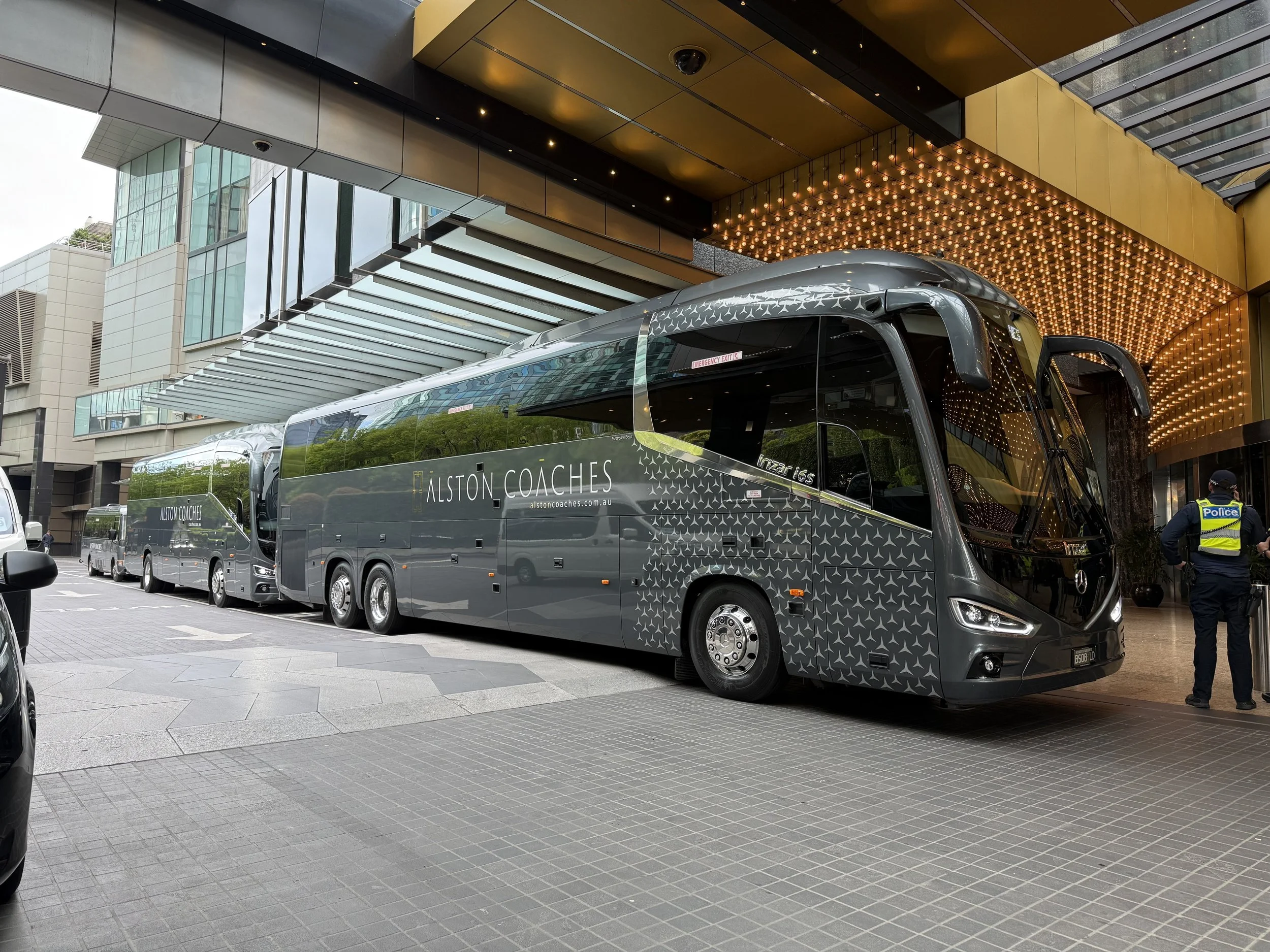
Alston Coaches provides comprehensive coach hire in Melbourne for interstate travel to all major Australian destinations, including Sydney, Adelaide, Canberra, and regional centers across Victoria, New South Wales, South Australia, and the ACT. Our interstate fleet includes purpose-built long-distance coaches with amenities specifically designed for extended journey comfort.
Every interstate coach hire booking includes:
Modern coaches with reclining seats, climate control, and onboard bathroom facilities
Experienced drivers familiar with major interstate routes and optimal stop locations
Generous underfloor luggage capacity for full suitcases and equipment
WiFi connectivity and power outlets for business traveler productivity
Entertainment systems for passenger comfort during extended travel
Comprehensive insurance and interstate commercial passenger accreditation
24/7 operations support and roadside assistance coverage
We service all major interstate routes from Melbourne, with detailed journey planning that accounts for rest-stop requirements, driver changeover logistics for extended trips, and passenger comfort throughout multi-hour journeys. Whether you’re coordinating corporate conference travel, sporting team interstate fixtures, educational institution tours, or private group exploration, our interstate coaching experience ensures smooth, comfortable travel.
View our interstate coach services and request a detailed route quote, or contact our interstate booking team to discuss your specific destination, group size, journey timing, and amenity requirements. We provide comprehensive journey planning, including recommended departure times, optimal stop locations, realistic arrival times, and vehicle specifications that match your group profile and travel duration.
Frequently Asked Questions About Interstate Coach Hire from Melbourne
How much does an interstate coach hire from Melbourne to Sydney cost?
A Melbourne-to-Sydney coach charter typically costs $2,500 to $4,000 for a 45- to 57-seat coach, depending on specific requirements, season, and whether one-way or return service applies. This covers vehicle, driver, fuel, tolls, and standard rest stops. Multi-day bookings or peak-season travel (school holidays, major events) may result in higher pricing. Request detailed quotes specifying your exact dates, passenger numbers, and any special requirements for accurate pricing.
Do interstate coaches have bathrooms on board?
Most purpose-built long-distance coach hire in Melbourne vehicles include onboard bathroom facilities specifically for interstate journeys exceeding 5 to 6 hours. However, not all coaches offer this amenity, so explicitly verify when booking whether bathroom facilities are essential for your group. Coaches without bathrooms require more frequent stops, which extends the total journey duration.
Can we make stops at specific locations along the route?
Yes, private coach hire in Melbourne for interstate travel allows custom stop planning. Common requests include specific service centers for meals, tourist attractions en route, or business locations requiring brief visits. Discuss your preferred stops when booking so operators can plan timing and confirm feasibility. Additional stops beyond standard rest breaks may extend journey duration and, if they significantly alter the route distance, potentially affect pricing.
Do we need two drivers for Melbourne-to-Sydney trips?
Not typically. Melbourne-to-Sydney journeys of 9 to 10 hours, including stops, fall within the single-driver capability under fatigue regulations. Drivers are required to take mandatory breaks during scheduled passenger stops. However, if you plan an immediate return journey (Sydney to Melbourne, same day or next day), a two-driver operation is required because combined driving exceeds the single-driver daily limit. Two-driver requirements affect pricing through additional driver costs.
Can interstate coaches handle winter alpine conditions?
Professional interstate operators equip coaches for winter travel, including potential snow and ice on alpine highway sections (particularly Hume Highway Razorback range). This includes appropriate tires, and drivers carry snow chains when forecasts indicate possible winter conditions. However, severe weather may force route delays or detours. Winter interstate coach hire in Melbourne requires building additional timing buffers and discussing contingency plans during the booking process.
What luggage capacity do interstate coaches provide?
Full-size interstate coaches typically accommodate 1 to 2 full-size suitcases per passenger in underfloor luggage bays, plus carry-on items in overhead racks. A 45-seat coach usually handles 50 to 60 standard suitcases comfortably. However, groups with excessive luggage (sporting equipment, musical instruments, exhibition materials) should discuss capacity requirements explicitly when booking. Operators can sometimes provide additional luggage trailers for groups with extraordinary requirements.
Can we depart Melbourne early in the morning to maximize our time in Sydney?
Yes, early morning departures (5:00 to 6:00 AM) are common for interstate group travel in Melbourne wanting to maximize destination time. This allows Sydney's arrival by mid-afternoon with full evening availability. However, early departures require passenger coordination (everyone must be ready at designated pickup times) and may incur off-peak surcharges, depending on operator policies. Discuss timing preferences during booking to confirm availability and any associated premium charges.
What happens if the coach breaks down during interstate travel?
Professional operators maintain comprehensive roadside assistance coverage and backup arrangements for interstate travel. Response times vary by location, but typically target 2 to 4 hours for the deployment of a replacement vehicle. Interstate breakdowns create more complexity than local issues, which is why selecting experienced operators with proven maintenance standards and interstate support networks matters significantly. Discuss breakdown protocols and backup arrangements during booking to understand specific operator capabilities.
